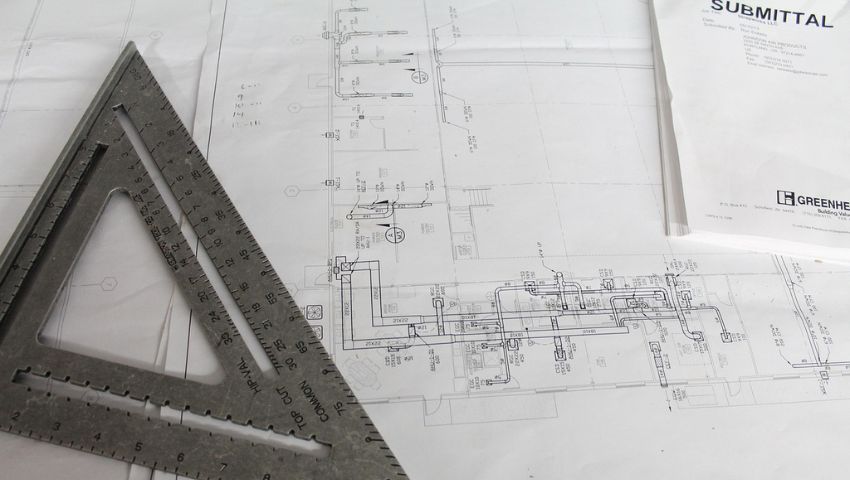
How to read an architectural project: guide for non -professionals
Understand How to read an architectural project It is today an increasingly useful competence, not only for those who work in the sector, but also for clients, customers and design enthusiasts. An architectural project is a visual and technical language that communicates space choices, functional and constructive. To decipher it, It is necessary to know the main graphic tools used by architects. Only in this way is it possible to actively participate in the design dialogue, avoiding misunderstandings and misunderstandings. Understanding a project also allows you to better evaluate the proposed solutions, making aware observations.
The bases: Technical drawing and representation scale
The first step to learn How to read an architectural project It is to understand what is a technical drawing. Unlike the artistic design, The technical one has precise and coded rules: Use lines, symbols and measures to represent a real object. Everything is fine Drawing and sizing scale (come 1:100 o 1:50) defines the relationship between the real dimensions and those represented on paper. The more the scale is “small”, The more detailed the drawing. Knowledge of the scale is essential to correctly imagine the spaces. Ignoring it could lead to wrong assessments on the real dimensions of the environments or architectural elements.
Architectural plant: vision from above
The architectural plant It is the representation of the building cut horizontally to approx 1,20 meters from the ground. Show the building layout: that is, the arrangement of the rooms, Dei die, of openings and furnishings. Correctly interpret one plan It is essential to understand the functionality of a space. A good plant transmits information on internal proportions and flows, making the design logic visible.
It is the main tool for those who have to evaluate the livability of an environment. Knowing it to read is also useful for hypothesizing future changes or improvements.
Building prospectus: The external image
Il building prospectus represents the building as you would see it frontally. Each project presents at least four prospects, one for each side. They show the articulation of the facades, the height of the plans, the openings, The planned materials and the finishes. It is a key element to view the integration of the building into the urban context and to understand the general aesthetic of the project.
Through the prospectus, stylistic consistency can be appreciated, Games of volumes and architectural quality. It is also a good indicator of the compositional choices and the relationship between full and empty.
Architectural sections: the interior in depth
The architectural sections show a vertical cut of the building. Allow to analyze the relationships between the various levels (plans, mezzanines, false ceilings), The internal heights, the distribution of volumes. Together with the plant, The section is the tool that best allows you to understand three -dimensional spatial relationships, especially in complex buildings or on several levels.
They also help to predict natural lighting and ventilation of spaces. The section reveals the constructive and functional soul of a building, often invisible in plan.
Symbology and Caption: The lexicon of the project
A project is not read only through the lines, but also with the architectural symbolism. Each element has a specific symbol: windows, porte, health workers, scale, materials. Without a correct interpretation of the Project Legend, There is a risk of misunderstanding fundamental information. The thickness of the lines is also codified: The more thick one line, The more the element represented is important or “Neighbor” to the observer.
Knowing these visual codes allows you to orient themselves among the graphic documents with greater safety. It's like learning a new language: serve tempo, but it enriches understanding.
Approach to reading a building project
- Start from Drawing scale and from the Project Legend.
- Analyze the architectural plant, followed by prospects and from architectural sections.
- Check the relationships between the different documents.
- If possible, Compare the project with a 3D or rendering model.
- Ask questions: Professionals also discuss to clarify interpretations.
This methodology will help you build a critical and structured look. There is no need to be experts to grasp the meaning of a well -designed project.
Reading an architectural project is accessible
Learn How to read an architectural project It is not just useful: It is a way to become more aware citizens. It means understanding the space that surrounds us, participate in an informed manner in building decisions and communicate effectively with professionals. With a little practice and knowledge, Even non -employe can approach confidence in the world ofresidential architecture and not only.
Continue to follow us To discover other useful content on the world of architecture, of the design and culture of building.
Dates and times
Latest articles
- Non-residential real estate: market beyond 20 billion in 2025
- Non-residential construction: authorized surfaces a +12,5% In the 2026
- Engineering and architecture competitions: +67,1% In the 2026
- Data centers and buildings: the new digital infrastructure market in Europe
- Experiential showrooms: how design and furnishing spaces are changing