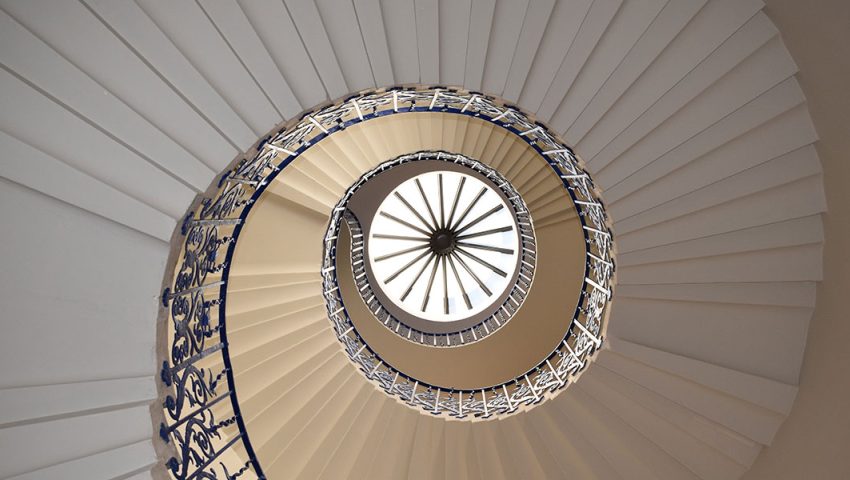
The impact of architecture on human psychology
Man and the surrounding environment have always had a relationship of profound interaction with each other, in this context, and assuming that by environment we do not mean only the "natural" one, but also all the architectural creations that fit into the landscape, the collaboration between the psychologist and the designer, between architecture and psychology, proves to be fundamental in arriving at the most up-to-date neuroscientific discoveries in this area.
In the everyday life of human life, it experiments with a multitude of different places to carry out its activities. In carrying out these, many do not focus on the sensations that these spaces produce, yet every place inevitably influences our psyche in a positive or negative way.
The psychology of architecture
This discipline, first experienced in the 1950s in America, it later also arrived in the old continent.
This is one multidisciplinary study aimed at laying the scientific foundations of the interaction between the different characteristics of the environment and the emotional responses of the users of the space, with the aim of directing new projects towards human needs in architectural matters.
From an experimental point of view, the first academic research addressed the effects of building renovation on the behavior of patients of a psychiatric hospital. Not long after, the studies expanded to work and residential environments.
The relationship between place and experience
Places represent a very important perspective in the construction of human experience and the formation of one's identity, exactly like what is experienced through friend and family relationships. By moving the reciprocity of this relationship it is possible to transform the rational thought of the professional figure of the architect into an affective discourse, studied through the careful research of the psychologist. Architecture becomes a complex job right from the early stages of design and must be organized following the interpretation of space by virtue of the use of color theory, of proxemics and the influence of biological factors. Simplifying it is possible to state that harmony with an environment it is given by various aspects that can be described through some principles:
- Functionality and usability;
- Pleasantness;
- How the individual deals with his experiences living the built environment.
As in the past, these neuroscientific studies prove to be advanced in the USA more than in other states, in particular at the Academy of Neuroscience for Architecture in San Diego, where the reactions of the nervous system to the architectural stimuli of the environment are still studied, researching the dynamics that can influence people's health and well-being. The approach applied to corroborate the research data focused mainly on the application of spaces subject to environmental discomfort and the involvement demonstrated by people during the activities they carry out. The observation of these phenomena has led to the consideration that the relationship between it space, the individual and his activities, definitively contributes to describing the quality of experiences, also showing the effects of sensations of well-being or uneasiness experienced by individual emotions.
The environment and human emotions
In parallel, brain visualization studies, have demonstrated that emotions are the result of somatic states, electrical and chemical prior to the awareness of feelings. In this case, pre-cognitive work all external stimuli, including environmental and architectural ones, they prove fundamental in the formation of such somatic states more or less consciously in the individual.
Among the involved parts of the brain, the insula plays a fundamental role and the studies of the neurobiologist Budd Craig are enlightening in order to understand how. Budd, highlighted that the right insular cortex responds in particularly stimulating situations, while the left one, on the contrary, in quiet situations with respect to a given environment.
From this it follows that the surrounding space can induce parasympathetic activity (through relaxation) a nice one, through increased energy consumption. The definition of this discovery is important because it establishes the veracity of the effects that an environment can produce, whether stimulating or relaxing.
The correlation between psychology and architecture is evident: the collaboration of the designer and the psychologist can create useful results to improve well-being and human activities in the most diverse architectural environments. When you have gods in mind personal projects, whether small or large, It's important to take this into account so you can always keep up with your emotions.
Dates and times
Latest articles
- Non-residential real estate: market beyond 20 billion in 2025
- Non-residential construction: authorized surfaces a +12,5% In the 2026
- Engineering and architecture competitions: +67,1% In the 2026
- Data centers and buildings: the new digital infrastructure market in Europe
- Experiential showrooms: how design and furnishing spaces are changing