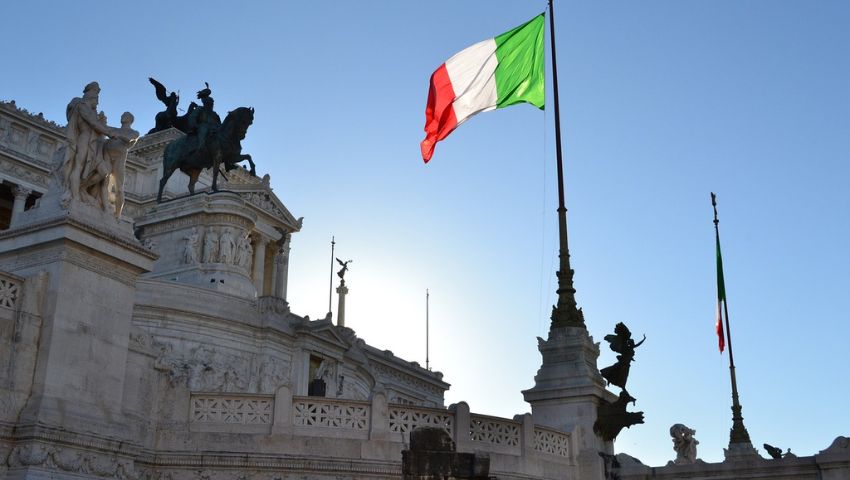
Italian historical architecture to be rediscovered to design the future
In a world that runs towards the future at tight pace, The greatest risk for those who design is one: forget the past. Nevertheless, l’Italian historical architecture speaks to us again. It does so through perfect proportions, details carved in the stone, invisible relationships between built and landscape.
Per i young architects and for those who look out today to the world of design, Rediscovering this inheritance is not a nostalgic exercise: It is a necessary gesture. Only by knowing the roots in depth can you create aware contemporary spaces, sustainable and significant.
Roman architecture: public space as a social structure
No path can start without going from Rome. Il Roman forum, il Pantheon, The aqueducts and roads still traced on modern urban maps are testimonies of a culture that has thought of architecture as political and identity tool. The pantheon cupola, Still today among the largest ever made of unailed concrete, It is a technical but also spiritual masterpiece: It symbolizes the link between earth and divine. L’Ancient Italian architecture teaches that each project is a collective act, and that the urban space is first of all meeting.
Middle Ages and language of matter: sculpt the narrative
In the heart of Romanesque and Gothic, and San Miniato al Monte a Modena, The building becomes narrative. The wise use of the stone, light, vertical heights and carved decorations served communicate spiritual and civil meanings. In a time when projects risk approaching 3D render, The ancient reminds us that the Matter is Message. The architectural detail is never accessory: And part of the story.
Italian Renaissance: harmony, measure, universal beauty
Con Brunelleschi, Leon Battista Alberti and Palladio, The Renaissance redefined the concept of space. The golden rules, The sense of proportion and the relationship between man and the environment reach the peak. Just think of the Dome of Santa Maria del Fiore or to the Villa Capra "La Rotonda", who still inspire designers all over the world today.
L’Italian Renaissance architecture It is a school of balance, and those who design today must learn from that geometric clarity and from that compositional intelligence.
Baroque and movement: design emotion
The Italian seventeenth century explodes with Bernini, Borromini, Guarini. The matter becomes dynamic, Architecture becomes sensory experience.
The Church of San Carlo at the four fountains, with its bold curves and perspective illusions, shows how space can move, amaze, involve.
In the era of emotional design and interaction, l’Baroque architecture offers surprising ideas: Create spaces that speak to the soul.
Vernacular architecture: Ecological intelligence of the territory
Not just great masters. L’spontaneous architecture that we find in the Italian villages, In the Apulian trulli, In Tuscan rural houses or alpine villages it is a model of sustainability before sustainability. Local materials, natural ventilation, Integration with the landscape: Everything is the result of one collective wisdom.
Today, Designing Green also means recovering these techniques, study them, reinterpret them with the tools of contemporaneity.
Nine hundred Italian: The modernity that dialogues with history
The last century produced some of the most Original Italian architects, capable of combining avant -garde and tradition. From the Casa del Fasce di Terragni at the Brion Tomb by Carlo Scarpa, passing through Michelucci, Iron, Nervi and Cosenza, The twentieth century teaches us that innovating does not mean tearing with the past, ma dialogue with it.
These architectures are manifest poetic, still very current for those looking for one form of cultured and rooted modernity.
The legacy to be protected: A duty for tomorrow's designers
The Knowledge of Italian historical architecture It is not a luxury for academics, But one professional and cultural need.
Per i young Italian architects, immerse yourself in the study of the masterpieces of the past means accessing an inexhaustible heritage of solutions, proportions, idea. But it is also a duty: that of being custodians and interpreters of an identity built over the centuries, To be transmitted alive to future generations.
If these themes are passionate about you and want to deepen the dialogue between history and project, continue to follow our blog: You will find other ideas, Reflections and articles dedicated to the world of architecture, of the design and culture of building.
Dates and times
Latest articles
- Non-residential real estate: market beyond 20 billion in 2025
- Non-residential construction: authorized surfaces a +12,5% In the 2026
- Engineering and architecture competitions: +67,1% In the 2026
- Data centers and buildings: the new digital infrastructure market in Europe
- Experiential showrooms: how design and furnishing spaces are changing